Skip to content

Sprouting beans and seeds…

May 14, 2013

I’ve just started sprouting beans and seeds. Since I’ve had cut down my meat intake due to my histamine issues, I’m learning to maximize nutrients in veggie foods. Sprouting beans and seeds is one way to not only minimize phytates (natural toxins in legumes and seeds and grains) but also maximizes other nutrients and protein in the seed, bean or legume.

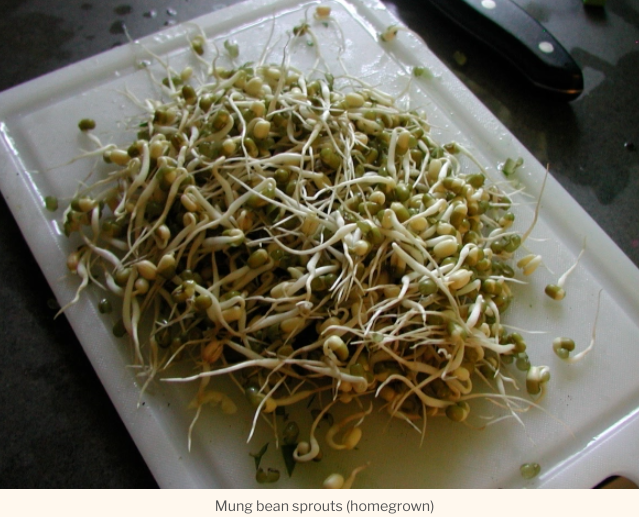
Below are photos of various beans and seeds at various stages of sprouting. I’m very much a beginner. So I’m not going to say much more here. If you’re interested in sprouting there is plenty of info to google.

I will say I did some research about the sorts of sprouters to use. Some people just use jars, but I like the rectangular ones I have below. They have really good drainage and that protects the seeds and beans from getting moldy. The round ones up top are good if you don’t live in a humid climate I think too. Both kinds are stackable so they don’t take much room.

I’ve been learning a lot about sprouting here: Sprout People

The most important things for anyone who wants to give it a go seems soaking them well and then draining them really well. And then the rinsing and draining every 10 to 12 hours. From there it’s about experimenting! You can eat them raw as a snack, put them in salads raw and you can also cook them…as you would other beans, grains and seeds. I’m looking forward to learning new recipes and trying lots of varieties of beans and seeds.

Broccoli sprouts

Broccoli sprouts

Quinoa sprouts

Quinoa sprouts

Navy bean sprouts

Navy bean sprouts

Lentil sprouts

Lentil sprouts

Spaghetti squash alfredo (vegan and grain free)

May 6, 2013

So I posted this little status update on Beyond Meds Facebook page on Tuesday:

I just created a vegan, grain free “pasta alfredo” made with spaghetti squash and homemade cashew cream…and sauteed garlic…OMG yum

squash2Several people were interested in the recipe so I am doing that for this #foodie friday. The thing is the best I can do is describe what I did as I did not measure anything and created it on the fly. I pretty much always cook this way and I think it’s a great thing to be able to do, so please experiment with me!

I tossed a fairly small spaghetti squash into the oven at 400 degrees for 40 minutes.  I put it in whole, but one MUST remember to stab them all over with a fork or it will EXPLODE otherwise! yes. I turned it around half way through to help the cooking be more even. Also DO NOT OVERCOOK or it will be mushy and lose it’s spaghetti like nature. It’s good to have it a bit undone since after baking it it will be tossed in a sautee for a few minutes too.

Once the squash is cooked I cut it in half and cleared out the seeds. The meat should pop out quite easily from the shell, but sometimes you have to work a bit harder than others. The photograph here is what it looks like. Truly like spaghetti!

For the cream sauce I made a cashew cream. I do have a bit of a recipe for that:

Soak 2 cups raw cashews in water for 4 to 8 hours. Drain the cashews and rinse under cold water. Blend the cashews in a blender with fresh water. Cover the cashews with up to an inch of extra water. Blend on high until very smooth. This will likely make much more than you need. You can freeze the remainder or use it in some other way.

I then sauteed a very generous amount of garlic in MCT oil. MCT oil has all the benefits of coconut oil but doesn’t have the flavor of coconut. I like coconut oil, but not all the time…Sometimes you do not want coconut flavor in your food. MCT oil and coconut oil both have very high smoke points so they’re good for sauteing for that reason. So as far as the garlic goes, use as much as you like. I’m a big garlic fan and it’s hard for me to have too much garlic and in my opinion for this dish, the more the better. (oh, if you’re not vegan, you can use butter or ghee, or really the cooking oil/fat of your choice)

So after the garlic was sauteed I tossed in the squash and broke it up so it was very spaghetti like, mixing it with the garlic and oil. Be sure not to cook it too much again here or it will lose it’s spaghetti like texture.

I then put a teaspoon full of nigella sativa seeds and a teaspoon full of whole black pepper in my electric spice grinder (same machine used for coffee grinding if you do that in your home). I tossed that on top and mixed it all up, adding salt to taste as well. Lastly I slowly poured in the cashew cream until I had enough to make it yummy and creamy and alfredo like. Use as much or as little as you like!

An alternative to the nigella sativa seeds which would be really good is to use nutmeg. Go easy on the nutmeg. It’s easy to use too much. Add a little bit at a time and see how it goes. It’s really good in combination with fresh black pepper and is how I used to make this sort of dish. I’m allergic to nutmeg so can’t use it anymore.

Nigella sativa seeds are actually quite lovely and delicious and a natural anti-histamine food too. Since discovering I have a severe histamine intolerance I’ve been learning a new way of eating. I am not a dedicated vegan for example…it’s just that for now it’s helping me keep my histamine levels down to eat very little animal products.

Eating wholesome whole read food is important for body/mind/spirit health and well-being. I’ve written a lot about my adventure with diet and healing here:  Nutrition and gut health, Mental health and diet

Seaweed salad

March 4, 2013

wakame 2I had given up eating seaweed briefly when I first discovered the histamine intolerance. Many seaweeds increase histamine but apparently some do lower it as well. I did not know which was which. I was eating many varieties of seaweed because it’s highly nutritious. My two favorite were nori and wakame.

I checked in with The Low Histamine Chef, and she let me know that wakame had anti-histamine properties. When we add food back in we still need to be careful and I was happy to find out that wakame agrees with me. I used to eat it in fish soups all the time. Now I’ve started playing with it in more ways since I’m not eating fish.

Wakame can grow over 30 times it’s dehydrated size so it’s also very economical along with just plain delicious.

I’ve made various salad/mixed veggie dishes and they’ve turned out very well.

I’ll share the recipe of one of them. Feel free to get creative and do variations as that I what I’ve been doing.

These are amounts for 2 people eating a meal sized salad, so just add more if you’re cooking for more.

  • 1/2 cup wakame seaweed
  • 1/2 red onion chopped
  • 2 celery stalk chopped
  • 2 inch piece of ginger grated with microplane grater
  • sesame oil to taste
  • salt and black pepper to taste
  • 1/2 cup of sunflower seeds 
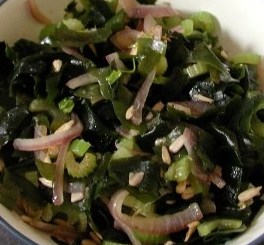
Seaweed salad with sunflower seeds

Seaweed salad with sunflower seeds

So I sliced the onion in half circles and chopped the celery and sauteed the two veggies. I used MCT oil, but you can use a mild flavored cooking oil/fat of your choice. Ghee would be good and I’d have used that if I was tolerating it. Since I top the dish off with sesame oil something nice and mild flavored is best so that you can taste the sesame oil later. Saute the veggies just until they’re softened. Do not brown. Put them aside.

Put the 1/2 cup of wakame in a couple of cups of water and bring to a boil. Turn off the heat and let the wakami sit until completely rehydrated. The brand I use is cut up in bits and makes for very easy cooking. If you have something that’s not cut up in bits you will have to do that yourself.

Once the wakame is fully hydrated toss the seaweed into a colander to get rid of extra water. Run a bit of cool water over the seaweed.

Combine the seaweed and the now cooled sauteed veggies. Top with the sunflower seeds and toss  with a bit of sesame oil.

Ready to eat.

As a variation I sliced red cabbage in thin strips instead of using celery. That was quite nice as well.

Amaranth greens with hemp seed milk curry

February 24, 2013
Beautiful red and green amaranth greens

Beautiful red and green amaranth greens

I found some amaranth greens at my local asian market and made a lovely dish inspired by The Low Histamine Chef   - I made homemade hemp milk instead of using coconut milk (as in her recipe) and in addition to the red onion and garlic I added fresh grated ginger and turmeric roots (and some fresh black pepper to increase the bioavailability of the turmeric)…it was very yum!

Ingredients:

  • red onion 
  • garlic
  • coconut oil
  • ginger
  • turmeric
  • hemp seeds
  • amaranth greens

What I did was cut up a red onion and some garlic and I sautéed them in a bit of coconut oil. Then I added a generous amount of both ginger and turmeric. Maybe about 3 tablespoons of the ginger (finely grated with a microplane grater) and 1 tbls of the turmeric. Play around with amounts of herbs and spices and see what you like. It’s hard to do amounts of any of these things really since it depends on how many greens you have to begin with.  This is how I cook in any case. I’m not a recipe gal. I cook to taste. I think it’s a wonderful way to cook, but I know not everyone is comfortable doing that and so usually I do more in the way of amounts etc when I share a recipe. This time I just really didn’t pay attention and I’m not sure how to explain the amount of greens I used.

So, after the saute is lightly browned I tossed in the freshly washed greens while they were still wet so that the moisture would cook them. I tossed them about with the saute until they were cooked down — just a few minutes.

I put 1/2 cup of hemp seeds and half a cup of water in a large jar and made it into milk using the immersion blender. If you don’t have an immersion blender a regular blender is fine. Then I tossed the hemp milk into the veggies. I left the pulp in the milk. If you want a smoother milk you can filter it out with a nut milk bag.

Oh, I also tossed in half a sweet potato cut up in small pieces. I put those into the saute at the beginning, with the onions and garlic.

Thanks to The Low Histamine Chef who is turning me onto many lovely low histamine and anti-histamine foods since I discovered that I have a histamine intolerance. I always have loved being adventurous with food, so even now as my restrictions increase due to allergies and sensitivities I am still adding new foods I’ve never eaten before! What fun.

Amaranth greens with hemp seed curry

Amaranth greens with hemp seed curry

This is what I made. Of note, many spices in curry powders are not good for people with histamine intolerance, but ginger and turmeric are both very good anti-inflammatory herbs that generally do not cause problems. All individuals are different however so if you’ve not used these herbs before it’s always worth noting how your body likes anything new to it.


Fresh turmeric and fresh ginger (roots for your health)

February 18, 2013

I use fresh ginger all the time in many foods. Fresh turmeric, on the other had I just found recently at the local Asian market.

I’ve had to stop taking most of my supplements since I discovered the histamine issue. Supplements seem to bother and raise my histamine levels. Not sure if it’s the fillers or the fact that the organic parts are dry and not fresh, or a combination of the two. In any case, I do better with less supplements I’ve found.

So since the turmeric I was using was a supplement or a dried herb powder when I cooked I started looking for a fresh source and found it!

turmeric and ginger with microplane grater

turmeric and ginger with microplane grater

I cook with turmeric and ginger both quite frequently. The larger root above is the ginger and the smaller one is the turmeric. What I’m sharing today though, is a nice hot tea I make to help keep the pain of withdrawal at bay. Both turmeric and ginger as I’ve stated above are highly anti-inflammatory foods. They’re good for everybody’s foundational well-being, too, as Dr. Weil talks about in the video below. They’re not just indicated for pain.

For the tea I grate up some of both these roots:

OLYMPUS DIGITAL CAMERA

I put the grated root into a cup or heavy glass and put boiling water over it. In this particular mixture I’ve added fresh ground black pepper since it helps the turmeric bioavailability go up. The last ingredient in this cup of delightful and spicy tea is a wee bit of whole leaf stevia powder. When I say whole leaf, I mean the original GREEN plant in powdered form. Green powder. NOT the white highly processed stuff, nor the clear liquid which is also highly processed. You just need a wee bit of the green powder and I don’t think of it as sugar. Because while it’s sweet, it’s simply not sugar. It’s a herb and it tastes good in this tea.

turmeric, ginger, black pepper tea

turmeric, ginger, black pepper tea

Final product (I drink down all the bits of herbs/spices)
Not such a great picture of the tea, but it’s got a nice hue in any case, eh?

Eating wholesome whole read food is important for body/mind/spirit health and well-being. I’ve written a lot about my adventure with diet and healing here:  Nutrition and gut health, Mental health and diet


-
-
-

--

More on ginger and turmeric in this very short video with Andrew Weil:

Creamy butternut and hemp seed soup

February 8, 2013

soup

I’ve been learning to cook and eat all over again since I changed to a low histamine diet. The list of disallowed foods has changed drastically for me and I’m not eating animal products again for the first time in quite a long time (with the exception of ghee, which I make myself in my kitchen with grass fed, hormone free unsalted butter). I will be writing a post eventually that shares about this really big change in my diet.

This soup features hemp seed milk that I made in my kitchen to thicken and make it creamy. It turned out very good.  I was quite pleased and it’s my first recipe I’m sharing on the blog since I went low histamine. You may have noticed that Foodie Friday skipped a few weeks of recipes while I was figuring out how to eat again.

This is good soup, anyone can enjoy it, you don’t need to be histamine intolerant.

Ingredients:

● 1 small to medium butternut squash
● 3 cups chopped celery
● 1 small bunch fresh chopped parsley
● 1 onion chopped
● 1 cup hemp seeds
● 2 cups water
● 3 – 5 cups stock, use as much as you need to get the consistency you like (I made a homemade veggie stock on another day that I then froze. You can use any stock you prefer vegetarian or meat based)
● fresh sage/rosemary/thyme to taste — pick and choose your fresh herbs. We have these three in our garden and they were great all included in this recipe. If you’ve not got fresh herbs you can use a similar bouquet of dried herbs. I used a couple of tablespoons. Dried herbs you’ll want to use somewhat less. Experiment and taste.
● salt/fresh ground black pepper to taste
● 2 tbls ghee (You can use coconut oil or butter instead or whatever fat/oil you prefer)

Roast the butternut squash at 400 degrees F until it’s soft. It took about 1 hour for mine. It will vary a bit according to the size of the squash. I leave mine whole, you can also cut it in half, cut side down on a pan and that will take less time.

While the squash is cooking sautee the onion and celery in the ghee. Let it get very lightly browned. Add the stock, the parsley and other fresh herbs and let simmer. You can save some stock for while you’re pureeing the mixture so you can control how thick the soup is. If need be adding a bit of water at the end would be fine as well.

Make the hemp milk by blending the cup of hemp seeds with 2 cups of water. You may want to add a bit more water if it’s too thick.  You can use the immersion blender or a regular blender. I leave the seed pulp in the milk too. If you don’t want to do that you can filter the milk through a nut bag.

When the squash is finished roasting cut it in half and scoop out the seeds. You can toss these or you can roast them like pumpkin seeds. Then scoop out pieces of the squash into the soup. Add your salt and pepper to taste and the hemp milk.   Once it’s all in there and all the veggies have softened from simmering puree the whole thing. I use my favorite small kitchen appliance again: the immersion blender. If you’ve not got an immersion blender a regular blender will do, just transfer the soup in batches to the blender.

This soup turned out to be a very hearty cream soup and was enough to satisfy me all by itself for a meal. I froze left-overs in single portion pyrex containers for later eating. Those of us with histamine intolerance cannot eat left-overs unless they’ve been frozen immediately after cooking. Histamine develops quickly on food that has been cooked.

**first published on Beyond Meds

Eating wholesome whole read food is important for body/mind/spirit health and well-being. I’ve written a lot about my adventure with diet and healing here:  Nutrition and gut health, Mental health and diet

And you can find more Foodie Friday posts and recipes here.

Christmas meal for two…

December 25, 2012
Christmas meal for two

Christmas meal for two

● Leg of lamb slathered in fresh rosemary from the yard, minced garlic, salt and pepper…roasted until medium rare. (20 minutes a lb at 325 degrees)

● Sweet potatoes roasted with the lamb and tossed in the meat juices. This particular lamb was so lean I had to add some butter. I think the lamb was so lovely and lean because it grazes on the mountain grass right here a few miles from my home. No factory farming means lean natural lovely meat.

● Mixed cooked greens. kale, spinach, and cabbage tossed with chopped dried apricot and walnuts. Topped and tossed with olive oil.

Follow

Get every new post delivered to your Inbox.

Join 29 other followers

%d bloggers like this: